Moment's Notice
Reviews of Recent Media
(continued)
Alchemy Sound Project + Sumi Tonooka
Under The Surface
Artists Recording Collective ARC 6670
 For Philadelphia-based, veteran pianist and composer Sumi Tonooka, the forest floor becomes the conceptual foundation for Under the Surface, a seven-part suite inspired by the “wood wide web” – the subterranean fungal networks that connect trees across species, allowing them to share nutrients and information. In such mycorrhizal networks, strength is expressed through community rather than individual dominance, a radical revision of Darwinian survival that reframes cooperation as power. Extrapolating upon this idea, Under the Surface transposes an ethos of interdependence into sound.
The album brings together two key facets of Tonooka’s work: her quietly adventurous piano trio with bassist Gregg August and drummer Johnathan Blake, and the large ensemble writing she has developed through the Alchemy Sound Project, a composer-performer collective she co-founded with tenor saxophonist Erica Lindsay, trumpeter Samantha Boshnack, trombonist Michael Ventoso, and multi-reedist Salim Washington. Alchemy Sound Project has become an important creative outlet for Tonooka, and although the suite’s foundation remains the flexible interplay of her trio, the expanded ensemble adds orchestral breadth to the proceedings without sacrificing intimacy.
The date opens with “Points of Departure,” a trio piece that begins with Blake’s rousing drum intro before locking into a groove shaped by August’s funky bass lines and Tonooka’s brisk, angular piano figures; her harmonic voicings are fresh and assertive, and the trio’s responsiveness sets the tone for the suite. When the horns enter, the trio becomes fertile soil for larger growth, embodying the album’s botanical metaphor. Ventoso’s wah-wah introduction on “Savour” hearkens back to early Ellingtonian brass with raw, vocalized expressionism. The ensemble swings with layered precision, leaving ample room for Tonooka’s imaginative piano work, while Lindsay’s tenor improvisation unfolds with melodic confidence, buoyed by Blake’s vibrant drumming.
The album’s centerpiece is “Interval Haiku,” bookended by bowed bass and opening with an angular yet serene fanfare led by bass clarinet. Tight horn unisons ride atop a churning rhythm section, while Tonooka’s spare piano lines unspool with unpredictable lyricism. Boshnack’s flinty, probing trumpet solo is a highlight, followed by Washington’s warm, burly tenor as the ensemble settles into a subtle Latinized pulse.
Elsewhere, the suite reveals a wide emotional range. “Tear Bright” is a lush ballad, Tonooka’s romantic piano setting the mood before warmly voiced horns enter. “Mother Tongue” on the other hand embraces density and tension at a brisk tempo, with brass, woodwinds, and Latin-inflected bass lines propelled by Blake’s ecstatically precise drumming. “For Stanley,” Tonooka’s trio tribute to her mentor Stanley Cowell, offers a moment of disarming simplicity – intimate, reflective, and rhythmically nuanced. The title track closes the album with joy and humor, even slipping in Washington’s sly quote from “The Girl from Ipanema,” before settling into a mantra-like piano figure over which the horns soar.
Under the Surface is one of Tonooka’s most compelling efforts, blending jazz improvisation with classical structures and avant-garde textures with lyrical clarity. In a world that often mistakes confidence for strength, this music offers another model – one where generosity is powerful and collaboration outweighs competition. Sometimes strength doesn’t come from standing alone, but from reaching out and helping others stand tall.
–Troy Collins
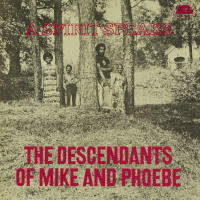
The Descendants of Mike and Phoebe
A Spirit Speaks
Strata East SES-19744-25
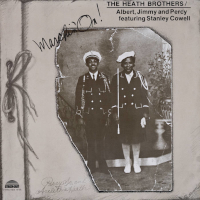
The Heath Brothers
Marchin’ On!
Strata East SES 19766-25
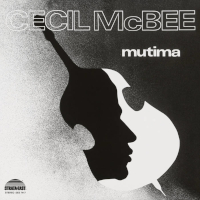
Cecil McBee
Mutima
Strata East 7417-25
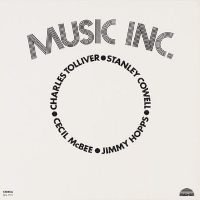
Music Inc.
Music Inc.
Strata East 1971-25
 The second batch of Strata East reissues by Mack Avenue is a smart culling of the catalog. Family history is the backdrop of both The Heath Brothers’ first album and The Descendants of Mike and Phoebe’s sole release. The eponymous debut of Music Inc. and Mutima trace the evolution of Cecil McBee from sideman to composer and leader. Such threads can be found throughout Strata East’s output. Hearing these stories in tandem gives greater depth and texture to each, and adds to the label’s enduring stature.
There were several seismic shifts in mainstream American culture during the 1970s, Alex Haley’s Roots – first the book and then the television series – being prominent among them. It coincided with, if not directly inspired, a wide swath of African American artists commemorating the struggles of their ancestors, a practice that contextualizes The Heath Brothers’ Marchin’ On! and The Descendents of Mike and Phoebe’s A Spirit Speaks. The core of The Descendents – composer and bassist Bill Lee and his three siblings: pianist and composer Consuela Lee Moorhead, singer A. Grace Lee Mims, and flugelhornist Clif Lee – trace their lineage to enslaved lovers in Alabama, who were separated when family members were sold off. The 1937 cover photograph of Percy, Jimmy, and Albert’s, parents in the crisp uniforms of their Elks lodge marching band conveys a nuanced message of pride and uplift.
The two ensembles approach legacy from different angles, the Heaths signifying Africa with mbira and “African double reed instrument” on much of the LP’s A Side, while the Lees gravitate towards traditional songs and “Take My Hand, Precious Lord.” However, original compositions dominate both albums, “Warm Valley” being the sole exception on Marchin’ On!, and the Thomas Dorsey classic and “Bo Weevil” being the two pieces not penned by one of the Lees. The Descendents gravitate towards soul jazz and church music, while the Heaths bridge Ellington’s cosmopolitanism and the emergent Afrocentricity, the latter signified by Stanley Cowell’s mbira at the front end of their album.
The Lees have remarkably complementary strengths in Moorhead’s nods to Horace Silver and Les McCann, Mims’ classically trained voice, Bill Lee’s compositional bead on modal jazz, and Clif Lee’s effortless coolness. They maintain a family portrait-like sound regardless of material, be it Moorhead’s sanctified “Well Done, Weldon” or the bassist’s supple “Coltrane” (recorded two months later as “John Coltrane” for Clifford Jordan’s Glass Bead Games, and co-credited to Clif Lee; both versions feature Billy Higgins on drums). The same can be said for the Heaths throughout their fraternal collaborations; however, Albert’s serviceable lead flute, Percy’s borderline cello sound on baby bass, and Jimmy’s tasteful restraint (save for going full bore on tenor for the finale of the side-long “Smilin’ Billy Suite”), distinguishes the elegantly constructed Marchin’ On!.
Given the classic status of Music Inc.’s live-at-Slugs albums, their first Strata East release from 1970 has been relegated a bit to the background. Some may be surprised to learn that the quartet fronts a star-studded big band playing charts by Charles Tolliver and Stanley Cowell, and may be disappointed that luminaries like Clifford Jordan and Dick Griffin don’t solo. That said, this eponymous release is overflowing with bristling energy. There are a few compositions previously recorded by small groups like Cowell’s “Brilliant Circles” and “Departure” and Tolliver’s “On the Nile,” but half of the six tracks document what was then new work, like “Household of Saud,” Tolliver’s powerful paean to McCoy Tyner, and Cowell’s almost concussive “Abscretions.” While the trumpeter and the pianist are the main soloists, McBee has a stunning turn on “On the Nile,” while the ridiculously undervalued Jimmy Hopps delivers the type of show-stopping pyrotechnics on “Household of Saud” that remain mandatory for any big band blow out.
By 1974, McBee had a stellar reputation for sprinting and spinning through the registers with uncanny agility, but he was not known for extended techniques, which were not really known as such at the time. Opening Mutima with the eleven-minute “From Within” for two overdubbed basses confirmed his bona fides as a conceptualist. Layering arco textures to project the dynamic of quest and question, McBee created a soundscape that retains not only its emotional gravity, but also, for lack of a better term, its avant-garde-ness. Then, instead of diving straight into burning post-bop, McBee momentarily suspends time with the graceful “Voice of the 7th Angel,” featuring the wordless singing of Dee Dee Bridgewater. The fire is heralded with “Life Waves,” with George Adams and Alan Braufman handing in red-lining solos. With the title piece and “A Feeling” demonstrating McBee’s ability to steer a composition through contrasting spaces, “Tulsa Black” ends the album with the funk, with McBee supplying the bottom with electric bass. Mutima is a gem.
–Bill Shoemaker
Tomas Fujiwara
Dream Up
Out Of Your Head OOYH036
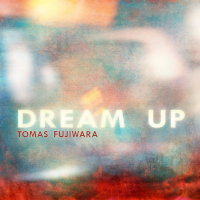 Dream Up is the debut album by New York–based drummer and percussionist Tomas Fujiwara’s Percussion Quartet. A prolific bandleader and an in-demand sideman, Fujiwara composed the nine-movement suite, drawing inspiration from Max Roach’s pioneering percussion ensemble M’Boom as well as his long tenure with the Off-Broadway percussion group STOMP.
Fujiwara, playing the drums exclusively, is joined by three other formidable collaborators: widely acclaimed vibraphonist Patricia Brennan and percussionists Tim Keiper and Kaoru Watanabe. Expanding the group’s palette, Keiper also plays the West African string instrument ngoni, while Watanabe adds the shinobue, a Japanese transverse bamboo flute. With this wide-ranging instrumentation, Dream Up moves beyond the conventional limitations of a percussion ensemble, offering a richly textured and melodic sound world in which rhythm, timbre, and harmony are in constant dialogue.
The title track opens with a 12-beat ngoni cycle that establishes a moody atmosphere. Brennan introduces crystalline melodic shapes, her shimmering tone accentuating the vibraphone’s resonant capabilities. Shifting textures and layered percussion deepens the sense of mystery, while the relative absence of pitch-defined instruments creates space for other forms of musical expression, signaling that standard musical hierarchies do not apply here. “Mobilize” evokes New Orleans parade rhythms filtered through odd meters and tightly interlocking polyrhythms. The ensemble moves with striking unity, and the addition of cymbals in the final section gives the piece extra propulsion, transforming rhythmic precision into a synchronized dance.
An introspective piece like “Komorebi” offers contrast, unfolding at a measured pace with an open structure. Bells, textured percussion, and the breathy tones of the shinobue evoke pastoral vistas, while Fujiwara’s tom-driven pulse gradually builds tension beneath Brennan’s serene vibraphone lines. “Recollection of a Dance” reintroduces forward momentum, led by Brennan’s melodic framework and overlapping rhythms from the group. Beginning in an animated 4/4 before shifting into 7/4, the piece blends celebratory energy with avant-garde intensity, as Watanabe’s flute soars above the ensemble to a climactic finish.
“Columns of Leaning Paint” centers on Fujiwara’s dense snare work, its barely contained energy showcasing the quartet’s polyrhythmic stamina. The shifting tempos and textures of “Tapestry” highlight the group’s deep communication, with Brennan’s push-pull phrasing set against the steady underpinning of the percussionists. The album concludes with the tender “You Don’t Have to Try,” a dreamlike ballad that begins with vibraphone and calabash in perfect unison before expanding with ngoni and cymbals. Its lullaby-like character closes the suite on a note of quiet resolution.
Fujiwara’s suite exudes rhythmic sophistication, dazzling virtuosity, and fearless imagination as it traverses brusque mood swings that maintain a cohesive, dreamlike sensibility. With one foot in tradition and the other in contemporary experimentation, Dream Up blurs the lines between ancient and modern practices while avoiding folkloric clichés, offering a compelling exploration of rhythm based on listening, interaction, and the transformative power of sound.
–Troy Collins